Türkiye’nin en büyük ve en bilinen cezaevi olan Silivri Cezaevi’nin adı değiştirildi. İstanbul Silivri Belediye Başkanı Volkan Yılmaz, ilçenin itibarına zarar verdiği gerekçesiyle Silivri Cezaevi’nin adının değiştirilmesi için cuma günü Adalet Bakanlığı’na başvurdu. Türkiye gazetesinin haberine göre; Yılmaz, dilekçesinde “Silivri denilince insanların aklına cezaevi geliyor. Bu da ilçemizin gelişmesini negatif yönde etkiliyor” ifadelerini kullandı. Başvuruyu değerlendiren Bakanlık, bu ismin Marmara Cezaevi olarak değiştirilmesini kararlaştırdı.
Tekrarlayan Düşük Nedir? İki ve daha fazla düşük yapılmasıdır. Kadınların yaklaşık %1’inde görülür. Üç ve daha fazla düşük yapılmış olması detaylı değerlendirmeyi gerektirir. Düşüklerin en sık görülen sebebi nedir? Düşüklerin çoğu (%60’ı) embriyonun oluşumu sırasında anormal sayıda kromozom almasından kaynaklanır. Bu tip genetik problem tesadüfen oluşur ve altta yatan bir tıbbi neden yoktur. Ancak ileri yaş gebelerde daha sık görülür. Gebelikte düşük hakkında bilgi almak için de gebelikte düşük çeşitleri sayfamızı ziyaret edebilirsiniz. Tekrarlayan düşüğe sebep olan başka genetik durumlar var mıdır? Bazı çiftlerde partnerlerden birinde translokasyon denen bir genetik bozukluk olabilir. Bu kromozomun bir parçasının koparak başka bir kromozoma yapışması durumudur. Translokasyon taşıyıcılarında herhangi bir fiziksel belirti olmaz. Ancak bazı yumurta ya da spermleri anormal kromozom taşır. Bu da embryonun az ya da fazla sayıda kromozoma sahip olmasına ve düşüğe sebep olur...
Ukrayna 'da direnişin sembolü haline gelen ve 40'tan fazla Rus uçağını düşürdüğü iddia edilen 'Kiev'in hayaleti' lakaplı efsane pilot Binbaşı Stepan Tarabalka'nın hayatını kaybettiği duyurulmuştu. Ancak bu gelişmeden günler sonra Ukrayna Hava Kuvvetleri şaşırtan bir açıklama yaparak "Kiev'in Hayaleti, karakteri Ukraynalılar tarafından oluşturulmuş bir süper kahraman efsanesidir" denildi. Efsanenin ise tek bir pilot değil, Kiev'in koruyan ekibin tamamı olduğu düşünülüyor. 6 Rusya ’nın Ukrayna’ya yönelik saldırıların ardından “Kiev’in Hayaleti” lakaplı Ukraynalı pilotun 29 yaşındaki Binbaşı Stepan Tarabalka olduğu açıklanmış ve 13 Mart’ta hayatını kaybettiği belirtilmişti. Yetkililer, tarafından Tarabalka’nın madalya ile onurlandırıldığını doğrulanmıştı. UKRAYNA HAVA KUVVETLERİ AÇIKLADI Ancak Rus ordusuna bağlı 40’a yakın savaş uçağını düşürdüğü öne sürülen “Kiev’in Hayaleti” lakaplı Ukraynalı pilotun gerçek olmadığı açıklandı. Ukrayna Hava Kuvve...
Tekrarlayan gebelik kayıplarının sebepleri ve tedavi yöntemleri nelerdir? Tekrarlayan gebelik nedir? Tıbbi adıyla “habituel abortus” sıklıkla gebelik sürecinin ilk üç ayında ve en az üç kere kayıpla tanımlanan bir durumdur. Yaklaşık olarak çiftlerin %2’sinde bu sorun görülmektedir. Bu kayıplar genellikle kromozomal ve genetik anormalliklerden kaynaklanır. Rahimde gözlenen anomaliler de gebelik kaybını tetikleyebilir. Düşük görülme oranı ise tüm anne adaylarında %20 oranındadır. Düşük gebelik riski ilerleyen yaşla ile birlikte artmaktadır. Düşük görülme olasılığı 24 yaş ve altında %9.5 iken, 30 yaş arasında %11 ve 40 yaş arasında ise %53’tür. Düşük belirtileri nelerdir? Herkesin bildiğinin tam tersi fiziksel egzersiz, yolculuk, cinsel aktivite, yürüyüş düşüğe neden olmamaktadır. Ciddi bir risk olmadığında bunlarda kısıtlama yapılması gerekmez. En sık karşılaşılan düşük belirtilerini şu şekilde sıralayabiliriz; – Vajinal kanamalar; vajinal kanama görüldüğü zaman hemen doktora başvurulm...
02.05.2022 02:34 | Son Güncelleme: 02.05.2022 02:45 Rusya Dışişleri Bakanı Sergey Lavrov'dan Ukrayna'da devam eden savaşla ilgili dikkat çeken bir açıklama geldi. Lavrov Ukrayna'daki operasyonlarını, İkinci Dünya Savaşı'nda Nazilere karşı kazandıkları zaferin yıl dönümü olan 9 Mayıs'ta bitirmek üzere hızlandırmayı hedeflemediklerini söyledi. Sergey Lavrov, İtalyan televizyon kanalı "Rete 4"te, Rusya-Ukrayna savaşına yönelik değerlendirmelerde bulundu. Lavrov, Rusya'nın Ukrayna'daki savaşı, İkinci Dünya Savaşı'nda Nazilere karşı zafer elde ettiği 9 Mayıs'ta bitireceğine dair çıkan haberlere ilişkin açıklama yaptı. "RUSYA HIZLANDIRMAYI AMAÇLAMIYOR" Çıkan haberleri yalanlayan Lavrov,"Rusya, Ukrayna'daki özel operasyonun tamamlanmasını, Nazizm'e karşı kazanılan 9 Mayıs Zafer Günü'ne kadar hızlandırmayı amaçlamıyor. Askerlerimiz eylemlerini belirli bir tarih üzerine yapay olarak uyarlamayacak. Ukrayna'daki ...
Tekrarlayan gebelik kayıplarının sebepleri ve tedavi yöntemleri nelerdir? Tekrarlayan gebelik kayıpları anne ve baba adayları için oldukça kötü bir durumdur. Tekrarlayan düşükler ile genellikle gebelik sürecinin ilk aylarında karşılaşılır. Kadın Hastalıkları, Doğum ve Tüp Bebek Uzmanı Op. Dr. Seval Taşdemir, konuyla ilgili önemli bilgiler paylaştı. Tekrarlayan gebelik nedir? Tıbbi adıyla “habituel abortus” sıklıkla gebelik sürecinin ilk üç ayında ve en az üç kere kayıpla tanımlanan bir durumdur. Yaklaşık olarak çiftlerin %2’sinde bu sorun görülmektedir. Bu kayıplar genellikle kromozomal ve genetik anormalliklerden kaynaklanır. Rahimde gözlenen anomaliler de gebelik kaybını tetikleyebilir. Düşük görülme oranı ise tüm anne adaylarında %20 oranındadır. Düşük gebelik riski ilerleyen yaşla ile birlikte artmaktadır. Düşük görülme olasılığı 24 yaş ve altında %9.5 iken, 30 yaş arasında %11 ve 40 yaş arasında ise %53’tür. Düşük belirtileri nelerdir? Herkesin bildiğinin tam tersi fiziksel egzers...
CK Yönetim kurulu Başkanı Gültekin Kaya'nın katılımıyla GÜNDEM TOKAT BU AKŞAM SAAT 18.00 DE TEMPO TV DE Tokat'a dair güncel haberler ile 16 Ekim Cumartesi günü bu akşam Saat 18.00 -20 arası Seyhan Güler ve Bayram Güvercin'in sunumuyla GÜNDEM TOKAT Haber programı TEMPO TV Ekranlarında olacak İZLEMEYİ UNUTMAYIN
Comments
#ticker-target, .ticker-content {
min-height: 40px !important; /* Bandın orijinal yüksekliği kaç ise o değeri yazın */
display: block;
overflow: hidden;
}
The big story behind a little Blue Dot The feed item title.
Editor’s note: May is Mental Health Awareness Month. Learn more about Google's mental health resources and tools.
A few years ago, Jenny Fandrianto noticed a sticker on a colleague’s laptop that read “ask me about Blue Dot.” So, she did.
She learned Blue Dot is a network of Googlers who simply listen to those who reach out to them. It's not therapy, and they don't tell anyone how to fix their problems. They just want to make it OK to talk about mental health. “Having that first conversation was really inspiring and energizing,” Jenny says. “I got to connect with someone and say ‘this is something that’s important to me, too.’”
Blue Dot’s mission to destigmatize conversations like the one Jenny had began in 2016, when it was founded by Rachael Bleakley and Jack Kaden (a Googler and a former Googler, respectively). Rachael had recently seen a news segment about a barber with a poster in his shop that read “Feeling down? Chat to us!” “He said it nearly always started some great conversations about mental health with everyone who sat in his chair.” She pitched the concept and within days, was on a call with a global group of Googlers putting a plan in motion.
Why a blue dot? “Blue Dot was for practicality reasons...it's easy to buy blue dot stickers for cheap and anywhere in the world locally, so it made sense to pick something all the local office leads could stock up on themselves if we give them the budget.”
While growth wasn’t Blue Dot’s priority, it quickly took off. “We knew there would be appetite for this but it was so hard to measure in the beginning; the last thing we wanted to be doing was asking Googlers to tell us when they had a 'chat' thanks to Blue Dot!” she says. “We also had to be careful we weren't putting Googlers in potentially difficult situations if they got into a chat that was slightly out of their depth; the expectation is only to listen and not to offer specific advice.”
Peter Corcoran took the reins at Blue Dot as it matured from its purely grassroots beginnings into an official employee resource group. “I was in the British Army for 10 years, and it was actually one of the reasons I got involved in Blue Dot, having suffered trauma in my military career,” Peter says. Becoming a Googler-led mental health resource sponsored by People Ops, he explains, was ultimately the right move. “It gave us access to better resources, better guidance. It created a much better ecosystem.” Maja Bilić stepped in around the same time to help Blue Dot’s transition. She helped with infrastructure—things like building the website and creating the listener sign-up system.
“Blue Dot’s mission will be accomplished if every Googler knows about their mental health resources, and if people articulate their mental health needs,” Peter says. “The aim isn’t the success of Blue Dot. It’s the success of the mission.”
Prior to the time Maja stepped in, Blue Dot was far more grassroots. “Before that we just had an idea. We had stickers,” she says.
A tipping point in this evolution came during a global Google town hall last year, where Blue Dot was mentioned as a resource for Googlers. “I was like, ‘we’ve reached critical mass!’” Peter remembers. “It was kind of like, ‘oh, we’re grown up!’”
Amy Costello, Blue Dot’s acting global lead, discovered Blue Dot in 2018 after working at Google for about six months. “I was looking for a 20 percent project and lo and behold, I learned about this program called Blue Dot.” Amy, who lost her father to suicide as a teenager, describes her work with Blue Dot as “something that really hits close to home. If this is an area I can give back in, how wonderfully fulfilling.”
Today, Blue Dot has nearly 2,000 allies in its network, but for privacy reasons, doesn’t collect data on sessions. Participants go through a self-guided training module on effective listening and what to do if someone needs additional support. "Listening is about devoting your full attention to another human being. It's a time to ignore the IMs, text messages and emails and provide someone with your undivided attention," Amy shares.
"When you’re talking to somebody, sometimes you’re thinking ‘well what am I going to say next?’ But your job is literally to not say anything. You’re only supposed to listen to this person and acknowledge what this person is saying.”
Jenny has benefited from Listener training even outside of Blue Dot. “While I’m on a video call, I don’t have email open, I’m not chatting with other people on Hangouts. In in-person meetings, my laptop is down, and if there are notes I need to take, I take them on paper. My attention is here, with you, right now, because you matter, and the time we spend together is valuable.”
“Honestly, when we introduced trainings, people were a little like ‘ugh, really?’” Maja laughs. But participants ended up loving it, herself included. “You learn how to actively listen, and active listening is such an important skill.”
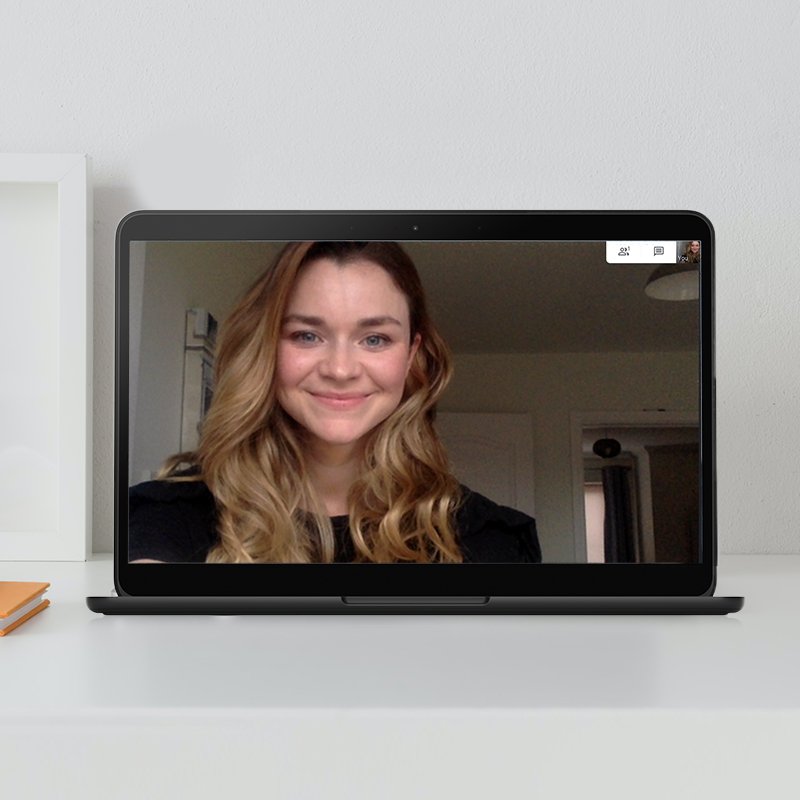
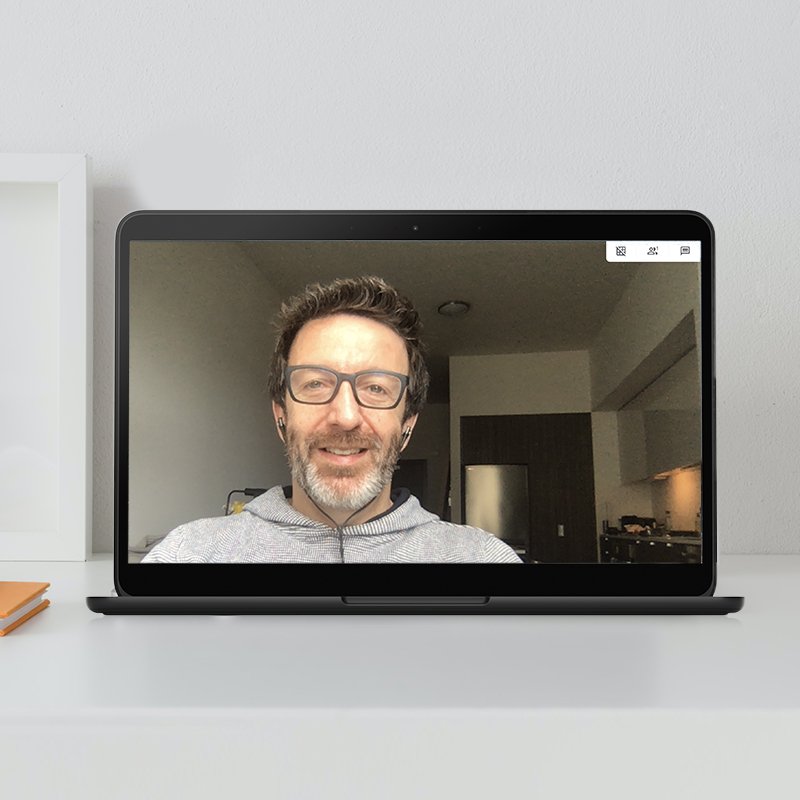
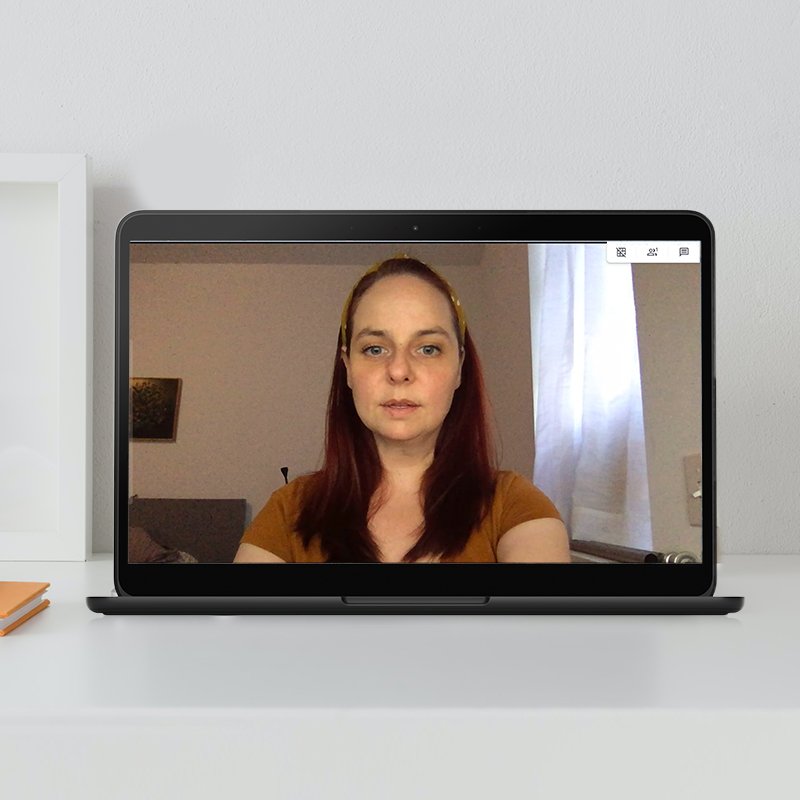
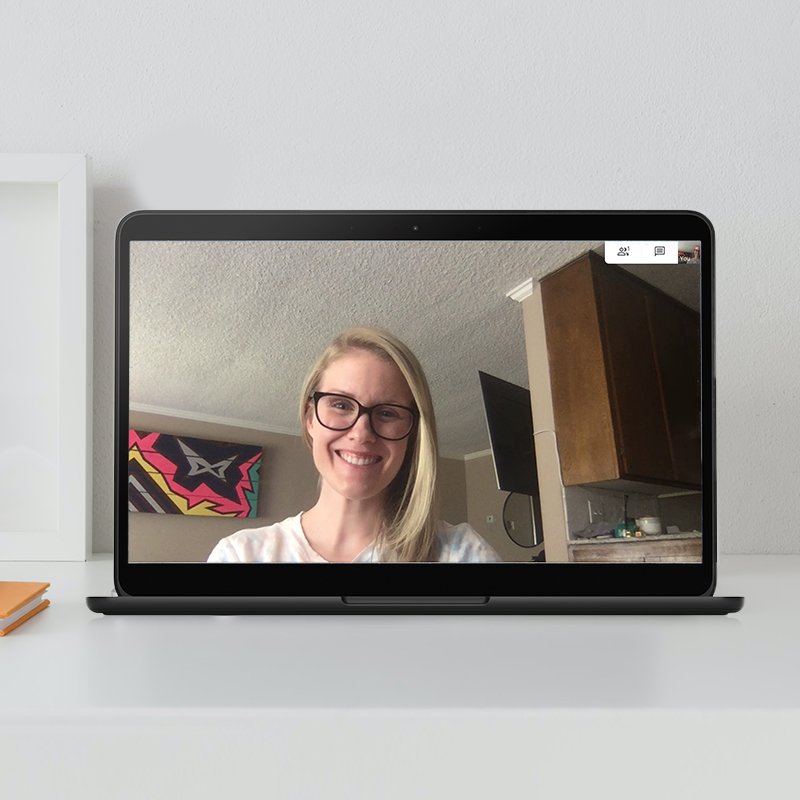
Recently, Blue Dot pivoted from in-person listening sessions, moving to online only. In March, Blue Dot Sunnyvale began hosting virtual get-togethers. “But then we realized...it’s virtual! It doesn’t have to be just our campus,” Jenny says. “We shared this idea globally with the entire Blue Dot community and now we have this office hours program being replicated in all these different regions. It’s become much bigger than what we originally imagined.”
The new online office hours may also be more welcoming for some. Googlers can select an appointment time with a Listener from any region that works for them, a system Jenny believes lowers the barrier for anyone who’s hesitant to reach out. “Just click and sign up and we’re here. I think it’s just a little bit more accessible to people who need it,” she says.
Jenny has noticed Blue Dot Listeners are taking on more and more time slots. “I’m seeing people who are making themselves available for office hours all times of the day. We have people signing up for even the holidays,” she says. “They’re thinking ‘you know, there might be people who need someone to talk to on a holiday, so I’m going to make myself available in case somebody needs it.”
Support systems are always a steadying force, but perhaps more so when it feels as if the entire world is on shaky ground. “I feel like on a day-to-day basis, my life is very happy, but at the same time, we don’t have the same releases right now. We don’t have the same kinds of mental breaks,” Amy agrees. “I find myself being over-tired, which is something I’ve heard from my colleagues as well. Having the Blue Dot community available for that outreach, for that friendly face, for people to know you are going to be really open to talking about things like this is so meaningful to the Google community.”
Despite the challenges of sheltering in place, both Amy and Jenny notice it’s also inspiring frank conversations about mental health. “During every team meeting now, we start with five minutes of ‘How are you doing? What’s new? Is there anything I can do to help?” Jenny says. “We’re talking about our personal lives a bit more now. It’s funny because I feel like we’re closer as a team even though we’re all virtual. It’s because we’re genuinely concerned for each other outside of work.”
Though Blue Dot has grown, the subtle ways it creates conversations about mental health remain. That little dot disintegrates some of the pressure; “ask me about Blue Dot,” for many, is easier to respond to than “ask me about mental health.”
Today, in lieu of laptop stickers we can’t physically see, Listeners include a blue dot in their email signatures. “So many people have asked ‘hey, I see you have this blue circle in your email signature—what’s that about?’”
The group is hopeful that someday, we won’t need a dot or anything else to openly talk about therapy appointments or depression. “We have no problem going to the doctor for a physical, we have no problem going to the dentist to get our teeth cleaned,” Amy says. “Why should we have a problem talking about our mental health, or saying, ‘hey, I’m going to the therapist today’? One of the really special things about Google is that those things are OK to say, and I feel like groups like Blue Dot help normalize it.”
Blue Dot has helped Jenny feel comfortable being an advocate for mental health, and talking about her own. “I’m much more open about a lot of other things I don’t think people talk about. No one really comfortably talks about the struggles of being a woman in tech, or has revealing conversations around fertility challenges like IVF or miscarriages.” As she’s become more forthcoming, she’s felt groups forming—supportive pocket communities that invite, even welcome, these kinds of conversations.
“People are OK being vulnerable, they feel safer,” she says. “And that’s brought a lot of us so much closer.”
The parsed post content.
Editor’s note: May is Mental Health Awareness Month. Learn more about Google's mental health resources and tools.
A few years ago, Jenny Fandrianto noticed a sticker on a colleague’s laptop that read “ask me about Blue Dot.” So, she did.
She learned Blue Dot is a network of Googlers who simply listen to those who reach out to them. It's not therapy, and they don't tell anyone how to fix their problems. They just want to make it OK to talk about mental health. “Having that first conversation was really inspiring and energizing,” Jenny says. “I got to connect with someone and say ‘this is something that’s important to me, too.’”
Blue Dot’s mission to destigmatize conversations like the one Jenny had began in 2016, when it was founded by Rachael Bleakley and Jack Kaden (a Googler and a former Googler, respectively). Rachael had recently seen a news segment about a barber with a poster in his shop that read “Feeling down? Chat to us!” “He said it nearly always started some great conversations about mental health with everyone who sat in his chair.” She pitched the concept and within days, was on a call with a global group of Googlers putting a plan in motion.
Why a blue dot? “Blue Dot was for practicality reasons...it's easy to buy blue dot stickers for cheap and anywhere in the world locally, so it made sense to pick something all the local office leads could stock up on themselves if we give them the budget.”
While growth wasn’t Blue Dot’s priority, it quickly took off. “We knew there would be appetite for this but it was so hard to measure in the beginning; the last thing we wanted to be doing was asking Googlers to tell us when they had a 'chat' thanks to Blue Dot!” she says. “We also had to be careful we weren't putting Googlers in potentially difficult situations if they got into a chat that was slightly out of their depth; the expectation is only to listen and not to offer specific advice.”
Peter Corcoran took the reins at Blue Dot as it matured from its purely grassroots beginnings into an official employee resource group. “I was in the British Army for 10 years, and it was actually one of the reasons I got involved in Blue Dot, having suffered trauma in my military career,” Peter says. Becoming a Googler-led mental health resource sponsored by People Ops, he explains, was ultimately the right move. “It gave us access to better resources, better guidance. It created a much better ecosystem.” Maja Bilić stepped in around the same time to help Blue Dot’s transition. She helped with infrastructure—things like building the website and creating the listener sign-up system.
“Blue Dot’s mission will be accomplished if every Googler knows about their mental health resources, and if people articulate their mental health needs,” Peter says. “The aim isn’t the success of Blue Dot. It’s the success of the mission.”
Prior to the time Maja stepped in, Blue Dot was far more grassroots. “Before that we just had an idea. We had stickers,” she says.
A tipping point in this evolution came during a global Google town hall last year, where Blue Dot was mentioned as a resource for Googlers. “I was like, ‘we’ve reached critical mass!’” Peter remembers. “It was kind of like, ‘oh, we’re grown up!’”
Amy Costello, Blue Dot’s acting global lead, discovered Blue Dot in 2018 after working at Google for about six months. “I was looking for a 20 percent project and lo and behold, I learned about this program called Blue Dot.” Amy, who lost her father to suicide as a teenager, describes her work with Blue Dot as “something that really hits close to home. If this is an area I can give back in, how wonderfully fulfilling.”
Today, Blue Dot has nearly 2,000 allies in its network, but for privacy reasons, doesn’t collect data on sessions. Participants go through a self-guided training module on effective listening and what to do if someone needs additional support. "Listening is about devoting your full attention to another human being. It's a time to ignore the IMs, text messages and emails and provide someone with your undivided attention," Amy shares.
"When you’re talking to somebody, sometimes you’re thinking ‘well what am I going to say next?’ But your job is literally to not say anything. You’re only supposed to listen to this person and acknowledge what this person is saying.”
Jenny has benefited from Listener training even outside of Blue Dot. “While I’m on a video call, I don’t have email open, I’m not chatting with other people on Hangouts. In in-person meetings, my laptop is down, and if there are notes I need to take, I take them on paper. My attention is here, with you, right now, because you matter, and the time we spend together is valuable.”
“Honestly, when we introduced trainings, people were a little like ‘ugh, really?’” Maja laughs. But participants ended up loving it, herself included. “You learn how to actively listen, and active listening is such an important skill.”
Recently, Blue Dot pivoted from in-person listening sessions, moving to online only. In March, Blue Dot Sunnyvale began hosting virtual get-togethers. “But then we realized...it’s virtual! It doesn’t have to be just our campus,” Jenny says. “We shared this idea globally with the entire Blue Dot community and now we have this office hours program being replicated in all these different regions. It’s become much bigger than what we originally imagined.”
The new online office hours may also be more welcoming for some. Googlers can select an appointment time with a Listener from any region that works for them, a system Jenny believes lowers the barrier for anyone who’s hesitant to reach out. “Just click and sign up and we’re here. I think it’s just a little bit more accessible to people who need it,” she says.
Jenny has noticed Blue Dot Listeners are taking on more and more time slots. “I’m seeing people who are making themselves available for office hours all times of the day. We have people signing up for even the holidays,” she says. “They’re thinking ‘you know, there might be people who need someone to talk to on a holiday, so I’m going to make myself available in case somebody needs it.”
Support systems are always a steadying force, but perhaps more so when it feels as if the entire world is on shaky ground. “I feel like on a day-to-day basis, my life is very happy, but at the same time, we don’t have the same releases right now. We don’t have the same kinds of mental breaks,” Amy agrees. “I find myself being over-tired, which is something I’ve heard from my colleagues as well. Having the Blue Dot community available for that outreach, for that friendly face, for people to know you are going to be really open to talking about things like this is so meaningful to the Google community.”
Despite the challenges of sheltering in place, both Amy and Jenny notice it’s also inspiring frank conversations about mental health. “During every team meeting now, we start with five minutes of ‘How are you doing? What’s new? Is there anything I can do to help?” Jenny says. “We’re talking about our personal lives a bit more now. It’s funny because I feel like we’re closer as a team even though we’re all virtual. It’s because we’re genuinely concerned for each other outside of work.”
Though Blue Dot has grown, the subtle ways it creates conversations about mental health remain. That little dot disintegrates some of the pressure; “ask me about Blue Dot,” for many, is easier to respond to than “ask me about mental health.”
Today, in lieu of laptop stickers we can’t physically see, Listeners include a blue dot in their email signatures. “So many people have asked ‘hey, I see you have this blue circle in your email signature—what’s that about?’”
The group is hopeful that someday, we won’t need a dot or anything else to openly talk about therapy appointments or depression. “We have no problem going to the doctor for a physical, we have no problem going to the dentist to get our teeth cleaned,” Amy says. “Why should we have a problem talking about our mental health, or saying, ‘hey, I’m going to the therapist today’? One of the really special things about Google is that those things are OK to say, and I feel like groups like Blue Dot help normalize it.”
Blue Dot has helped Jenny feel comfortable being an advocate for mental health, and talking about her own. “I’m much more open about a lot of other things I don’t think people talk about. No one really comfortably talks about the struggles of being a woman in tech, or has revealing conversations around fertility challenges like IVF or miscarriages.” As she’s become more forthcoming, she’s felt groups forming—supportive pocket communities that invite, even welcome, these kinds of conversations.
“People are OK being vulnerable, they feel safer,” she says. “And that’s brought a lot of us so much closer.”
The feed item description. Put the featured image on content. The feed item author. {authorlink} The feed item author link (If exist). https://www.blog.google/inside-google/working-google/big-story-behind-little-blue-dot/ The feed item permalink. https://www.blog.google/rss The feed URL. The Keyword The feed title.
The Keyword
The description of the feed. https://www.blog.google/static/blogv2/images/google.png The feed's logo image URL. BLOG GOOGLE This campaign title 687130 This campaign ID.
Templatesyard is a blogger resources site is a provider of high quality blogger template with premium looking layout and robust design. The main mission of templatesyard is to provide the best quality blogger templates which are professionally designed and perfectlly seo optimized to deliver best result for your blog.




 Hello, my name is Jack Sparrow. I'm a 50 year old self-employed Pirate from the Caribbean.